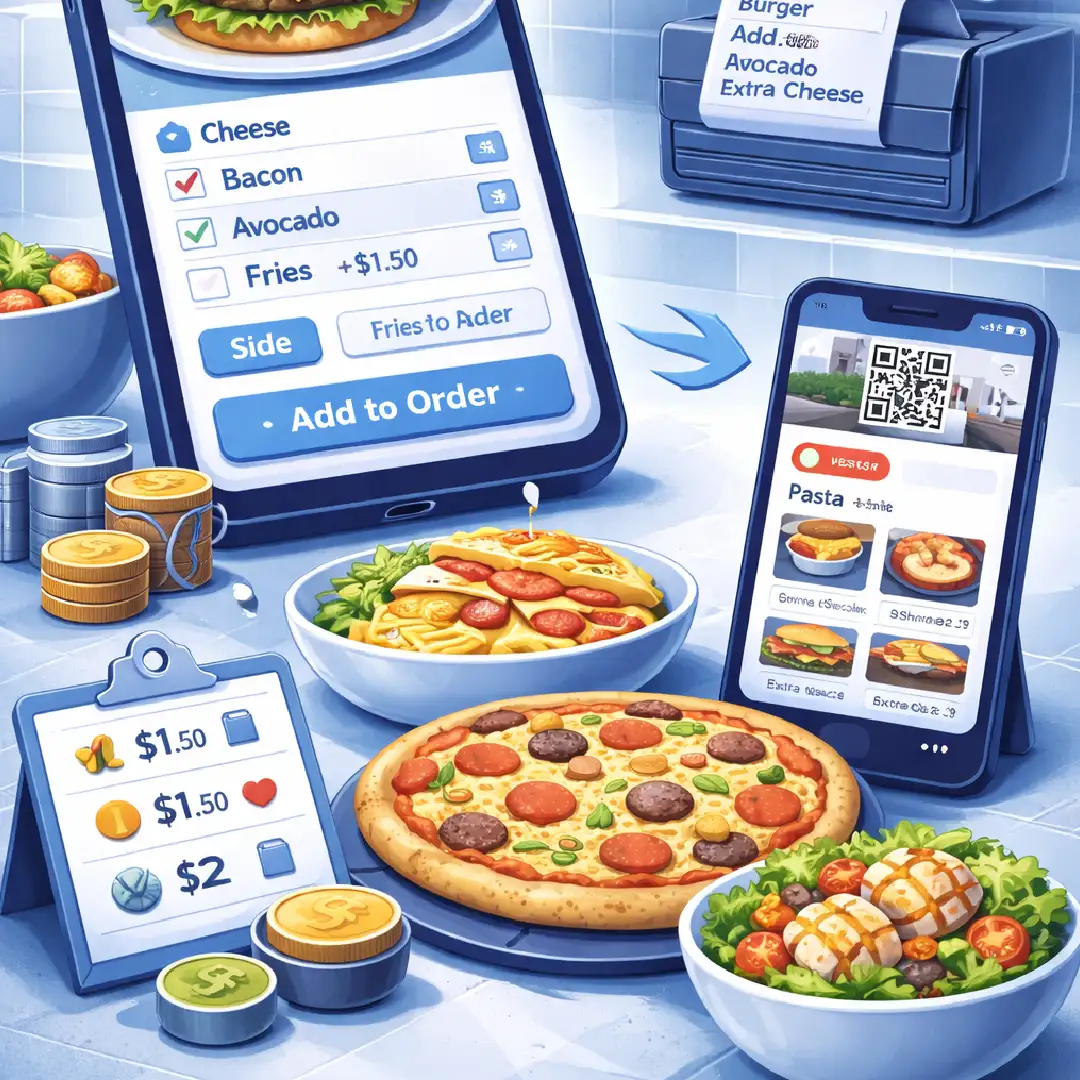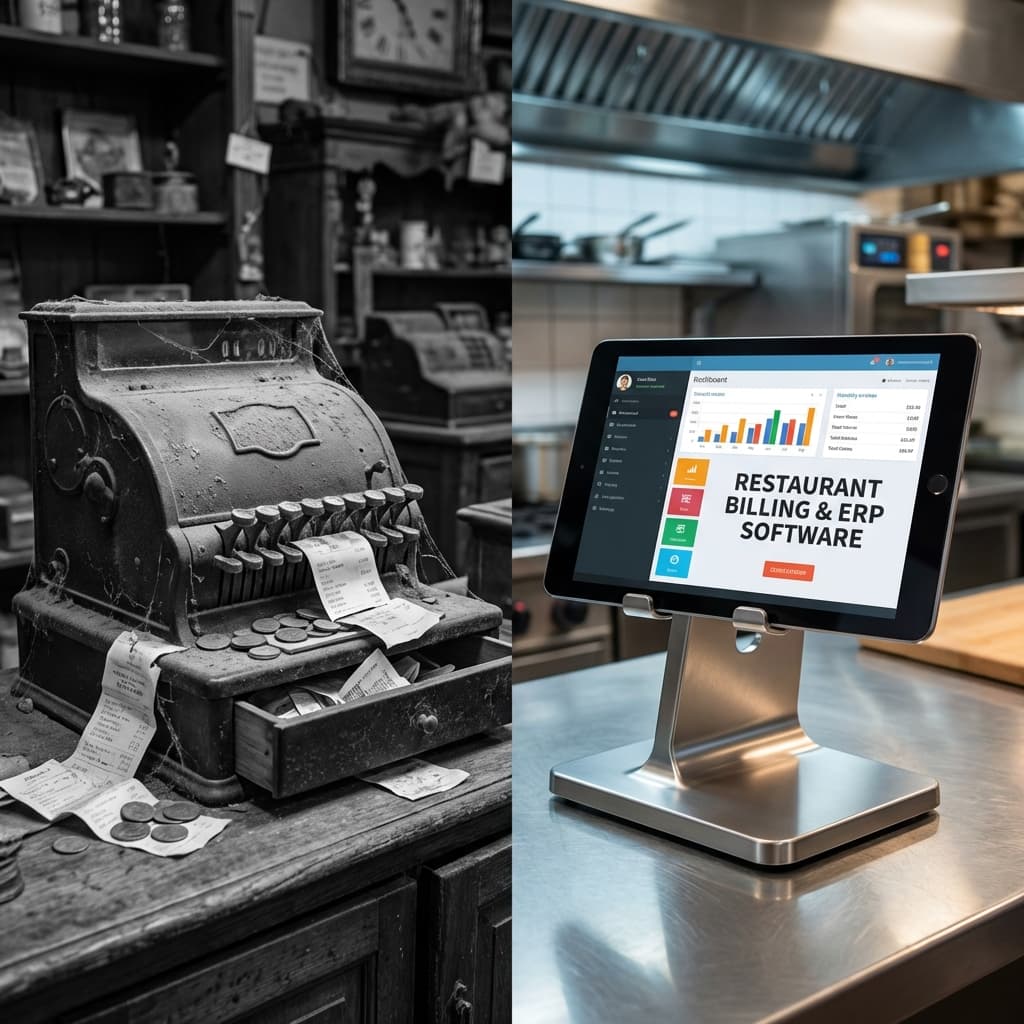
Running a restaurant today is no longer just about taking orders and printing bills. Speed, accuracy, and visibility across operations have become critical. Yet many restaurants still rely on traditional POS systems that were never designed for modern dining workflows.
This is where restaurant billing and ERP software changes the game.
In this article, we break down the difference between traditional POS systems and modern restaurant billing platforms—and explain what restaurants actually need to scale efficiently.
What Is a Traditional Restaurant POS System?
A traditional POS system is primarily built to:
- Take orders at the counter
- Generate bills
- Accept payments
Most legacy POS tools depend on dedicated hardware, manual order entry, limited reporting, and separate systems for kitchen, billing, and analytics. While this worked in the past, it struggles to keep up with today’s restaurant demands.
Why Traditional POS Systems Fall Short
Manual Order Flow Increases Errors
In a typical POS setup:
- Orders are taken by staff
- Entered manually into the system
- Communicated verbally or via slips to the kitchen
This creates gaps where mistakes happen—especially during peak hours.
Limited Visibility for Owners
Most POS systems show basic sales numbers but fail to provide:
- Real-time order value
- Peak hour insights
- Best-selling item analysis
- Table-level performance
Restaurant owners end up relying on spreadsheets or end-of-day summaries.
Poor Fit for QR Ordering and Contactless Dining
Modern diners expect:
- QR menus
- Contactless ordering
- Fast digital billing
Traditional POS systems were not built with QR ordering in mind, leading to fragmented solutions and add-ons.
Ready to modernize?
Join 500+ restaurants scaling with Epitto's QR-based ecosystem.
Start 30-Day Free Trialarrow_forwardWhat Is Restaurant Billing & ERP Software?
Restaurant billing and ERP software goes beyond basic POS functions. It connects:
- QR ordering
- Billing and invoicing
- Kitchen operations
- Payments
- Reports and analytics
All within a single, cloud-based system.
Key Differences: Billing & ERP vs POS
Integrated Order-to-Bill
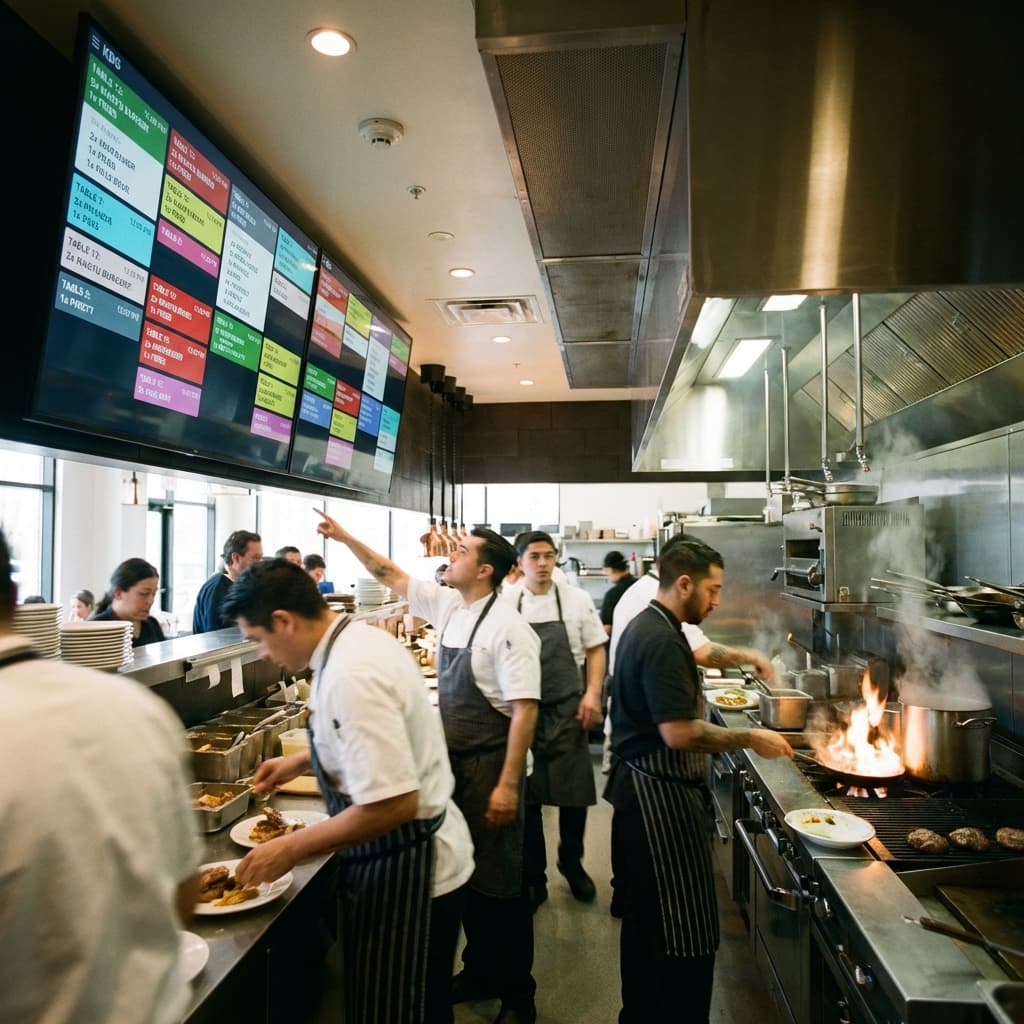
Orders flow directly from table to kitchen. No re-entry. No duplication.
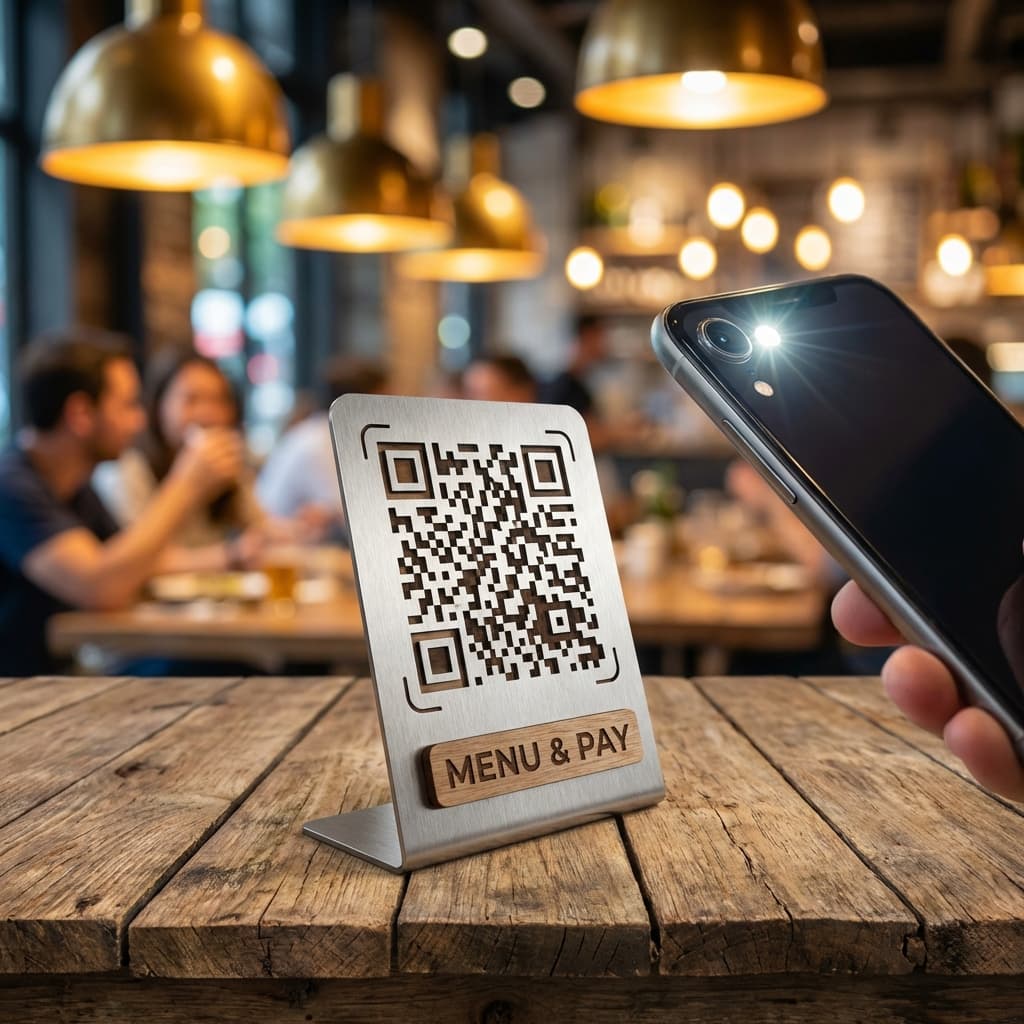
Built-In QR Ordering
Digital QR menus and automatic bill creation reduce staff dependency.
Real-Time Insights for Better Decisions
Restaurant ERP software provides:
- Live order value tracking
- Peak hour identification
- Best-selling item reports
- Payment method breakdowns
- Modifier-level sales data
These insights help owners optimize pricing, staffing, and menu design.
Cloud-Based and Hardware-Free
Modern systems work on phones, tablets, and any browser-enabled device. This eliminates expensive POS hardware and makes setup faster and cheaper.
Which System Is Right for Your Restaurant?
If your restaurant:
- Handles high dine-in volume
- Uses QR menus
- Wants better billing accuracy
- Needs real-time operational insights
Then a restaurant billing and ERP system is a better long-term choice than a traditional POS.
POS systems still work for basic counter billing, but they limit growth when operations become more complex.
Final Thoughts
Restaurants don’t fail because they lack tools. They struggle because their tools don’t work together.
Modern restaurant billing and ERP software replaces fragmented systems with a single platform that supports ordering, billing, kitchen operations, and reporting—without complexity.
For restaurants looking to operate faster, smarter, and more profitably, upgrading from a traditional POS is no longer optional. It’s inevitable.